
Alternative Ways To Maintain Dental Health

In our last blog post, we discussed the benefits and risks of many of our favorite chews. Chewing/gnawing is how our dogs and cats have evolved to keep their teeth clean. However, some of our animals (some seniors, some with a history of extractions, etc) aren’t able to chew and gnaw as easily as others. This post is a discussion of other ways to provide oral care.
Check out the similarity of the tiger and the house cat teeth, and between the Wolf skull and the dog’s teeth below it. You can always tell what any animal is designed by evolution to eat by studying the shape and size of their teeth. Compare the tiger and house cat photos, and compare the wolf skull and dog teeth below:
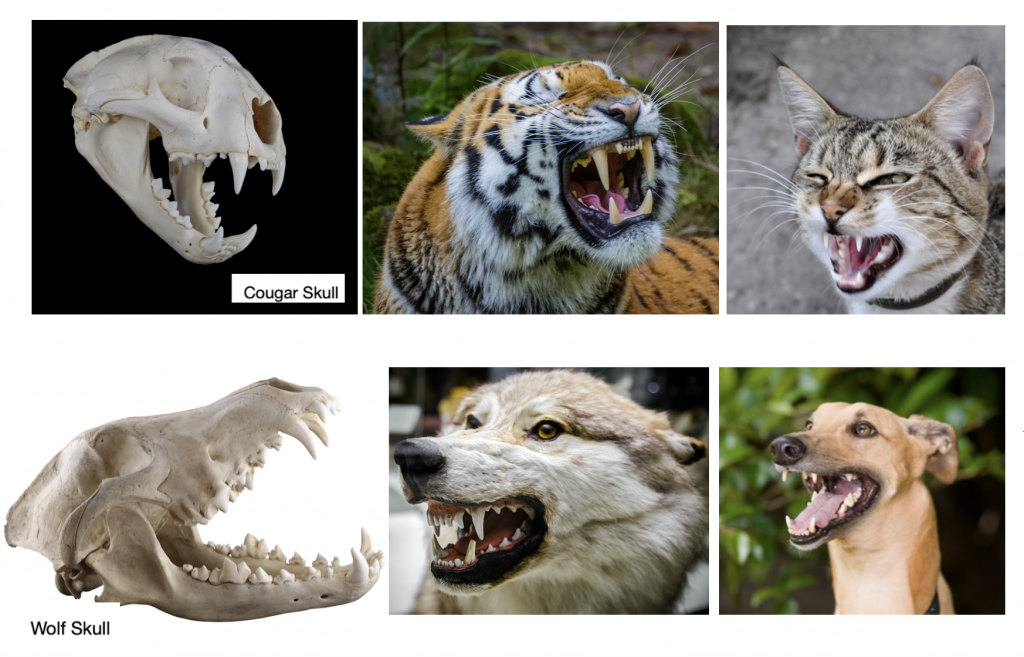
All images licensed from Adobe


We want to begin by reminding you that unfortunately, eating a kibble diet does not count as “chewing”.

A carnivore’s teeth are designed to tear and shear meat. Their jaws are designed to move the jaw up and down, but not side to side for chewing or grinding. The shape of our little carnivores’ teeth have not changed one bit in their evolution from their wild ancestors. Our dogs and cats, like coyotes, wolves, tigers and leopards (and even saber-toothed tigers), have specialized carnivorous molars called carnassial teeth designed to shear flesh and bone like scissors. At best they crack and swallow kibble diets, but the outer surfaces of those molars and the surfaces of the teeth along the gum line aren’t being scraped by the crunchy kibbles. The way they have evolved to clean their teeth is to chew through meat and bone and connective tissue with these back molars, which stimulates the gum line and scrubs those back teeth of the biofilm that can accumulate and turn to plaque.

Another problem with kibble that contributes to dental trouble is its high starchy carbohydrate content. Just like with humans, these simple carbohydrates can linger in their mouths and then break down into simple sugars. Bacteria feeds on these sugars and produces acid, which causes tooth decay. No one would argue that humans could clean their teeth simply by eating a lot of crunchy pretzels, but many do argue that dogs and cats should eat dry food to clean their teeth.

The best diet for overall health and dental health is a whole food diet with meat, organs and a few veggies (more for dogs than cats), and skipping the starchy carbs completely. See below in the cheese section for some of the benefits. This kind of diet doesn’t need to be an “all or nothing” proposition – even one 1oz nugget per day, or one on each meal can make an impact on their general health! The brands we carry are very safe to feed, and are often cheaper than feeding canned food! (More info on feeding raw here)

Here are some additional products, tricks and tips that will help all animals to keep their teeth and gums healthy:

BRUSHING TEETH!

No doubt, we know the most important thing humans can do to keep our teeth and gums healthy is brush, and the same can be said for our pets. I can hear you moaning from here…. I know that this isn’t necessarily the easiest thing to do with some animals, but it’s worth working on!

For those of you with puppies and kittens, now is the easiest time to desensitize them to this sort of activity. A puppy’s mouth is changing rapidly, and vigorous brushing is not recommended when they have their baby teeth, but getting them used to you looking into their mouths and inspecting their teeth and gums is incredibly important, especially later in life. What if your dog has chewed a stick and you can’t check if a splinter of wood is lodged in the gum? What if your cat isn’t eating well and you’re accusing her of being picky, when actually she’s in pain from inflamed gums? If your senior dog was developing a tumor in her mouth, would you be able to catch it early? Being able to check the color of the gum tissue can also really help to assess an animal’s hydration and alert you to medical problems – the gums can change color, becoming pale from anemia or yellow from liver issues, red from heat stroke or blue from lack of oxygen. They can also be a good indicator of shock: when you press on the gum tissue and the circulation returns to that spot within a second or two, all is well.

Any animal might learn to accept more inspections of the mouth and eventually allow brushing, but the key is not to just jump right in there and start scrubbing the first day.
Start by gently lifting the lip/jowl to take a peek and immediately reward with a tasty treat (perhaps a lick of an enzymatic toothpaste from your finger could be a good reward if they love the flavor. Never use human toothpastes, which are not meant to be swallowed). 
The next step might be to rub a bit of that toothpaste along their gumline with your finger. The yummy toothpaste left behind can be a good immediate reinforcer for this step of the process. When desensitizing any animal to new handling routines, respect any small signs that the process is stressful, like seeing the whites of their eyes, tucking their tail, or trying to get away. You want them to enjoy the process, so go backwards to a version of the activity that didn’t make them uncomfortable and just stick with that for a while, rewarding every time. Build up more slowly to your goal, and only make it a little harder when they’re happy with the activity. Even if you can only get as far as being able to regularly look at the teeth and gums, consider it a win!

You could progress from using your finger to rub their gumline to using a piece of gauze with toothpaste on it (dog toothpaste only- never toothpastes for humans), to perhaps a finger brush for bigger animals. If they’re leery of the toothbrush coming at them, you can choke up on it at first so your index finger is on the back of the brush where the bristles are, to hide the look of coming at them with a big tool. 


When brushing it’s not important to focus on the front teeth or to brush the insides of the teeth – your main goal is maintaining the outer surfaces of the back teeth and gums.

A few tips: You can brush facing them head on, or you might be more successful being right behind them, lifting their chin and brushing downward towards their back teeth. For cats and very small dogs you might check out the drug store for a product called Wisp, which is supposed to be a tiny quick travel toothbrush for people, but MAKE SURE to remove the little hard blue bead of toothpaste that it comes with.

If you’re brushing your teeth, perhaps call them into the bathroom with you and brush their teeth after you brush yours. This will help you remember to do it, and to give them a cue that it’s time for their yummy peanut butter or chicken toothpaste activity. If you forget to call them, they might hear you brushing and come running in for their turn. Even if you don’t get as far as brushing, if you can rub enzymatic toothpaste along their gums daily, you’re going to be doing something positive for their oral health.

Tips for brushing your cat’s teeth:

It can be done! If you have a kitten, we’d recommend following the steps for puppies outlined above. Take it slowly and do not force them into anything. Reward it well, and you might just be able to do more than you think. Check out this great post by Dr. Karen Becker, DVM on how to brush a cat’s teeth. Note: some cats who won’t allow brushing (like our Otis) might very well be willing to just bite down on the bristles of a toothbrush with kitty toothpaste pushed into the bristles. We would let Otis chew on the brush facing up, and then facing down. (Note: Dr Becker is no longer associated with Dr Mercola.)

It’s worth working on. Tooth and gum problems are expensive! Tooth brushing is just about free…

 
Other Products to Help You:

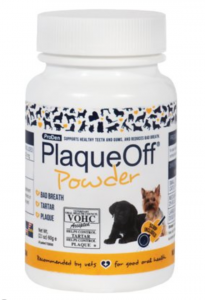
PLAQUE OFF!

Photo from Proden Plaque Off

What a tremendous help this supplement is!! We’ve carried it for nearly the entire 18+ years we’ve been open, and have seen amazing results. It’s a granular powder made from a certain kind of kelp, which according to clinical trials helps to break down the biofilm (the slimy buildup of bacteria that forms on the surfaces of teeth and hardens into plaque). It helps to prevent plaque buildup and breaks down the bond between the plaque and the tooth so it can more easily be removed with chewing action.
Within 2 weeks we see better breath, and within 6-8 weeks we see visible changes in the amount of plaque on the teeth. The dose is small, and it doesn’t taste like much (sort of like sushi wrapper) so it’s easy to hide.
A bit of impressive trivia: The makers of Plaque off for pets also makes a human version (it’s the exact same powder, in capsules). Customers had sometimes remarked to us that it had worked so well for their pets that they wished they could be on it too, so we brought the human version in. No one bought it (part of the fun of retail when you take chances on a new product) but Mike and I started taking it (later I just put the pet powder into empty capsules). We both had a cleaning before we started taking it, then 6 months later when we went back to our dentist, both of our numbers for gum health were better! Later, during a time I felt lazy about putting the powder into capsules, we were off it for a time, and both of us saw those numbers get worse. We stay on it now.
The only animals that should not take it are those with hyperthyroid disease (which unfortunately mostly occurs in cats). See the last blog post for suggestions for cat chews. The reason for this is that kelp naturally contains iodine, which can stimulate the thyroid gland. If the gland is already overactive in animals with hyperthyroid disease, you wouldn’t want to over stimulate it. Animals without hyperthyroid disease should be jut fine on it, as a little bit of kelp has its own nutritional benefits! The small jar is $23.99 and should last about a year for a cat or a small dog. We have another version aimed at cats that has brewers yeast included for greater palatability. This would also be fine for picky dogs to use. Bigger containers of the original formula are available as well. 
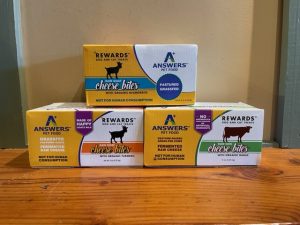
 

Photo By Green Dog Pet Supply

DELICIOUS AND NUTRITIOUS CULTURED RAW GOAT AND COW CHEESES ARE DENTAL SUPPLEMENTS!

These and the cow’s milk kefir cheeses are truly some of our favorite products, but they admittedly are a sleeper for us as they’re kept fairly out of sight in our freezers. First of all they’re delicious. When we’re sampling them out at the counter, I have trouble leaving any in the box for the dogs to try! They come in many organic flavors (goat = Cherry, Blueberry, Ginger, Turmeric, Cranberry. Cow = Cumin, Turmeric with black pepper, and garlic (my favorite). These are raw cheeses made with the milk from pastured, certified humanely raised, organically fed goats and cows, flavored with nutrient-rich flavors.“Cultured” means they are fermented like your yogurt might be. The benefits of the fermentation are vast (we should all be eating more fermented foods!) Fermented, raw foods are loaded with enzymes that can improve circulation, help speed tissue repair, and reduce pain, swelling, and inflammation —all helpful in healing gingivitis and gum disease. Answers products use fermentation to propagate probiotic bacteria. These good bacteria inhibit the growth of bad bacteria that cause oral disease (and also those bad bacteria that might cause safety problems!). By maintaining a healthy oral microbiome, these fermented foods help the mouth’s natural disease-fighting systems stay fully functional. Also, when the probiotics reach the gut, they improve the function of the systemic immune system which further helps to maintain their health, both oral and overall.

Cheeses that have been shown to help in decreasing the acidity in plaque (for humans too! Google which cheeses are best for human dental health). Cheese can also increase saliva flow, therefore helping wash away acids, sugar and bacteria on the teeth. Calcium and phosphates in milk and other dairy products help put back minerals that teeth might have lost due to other foods. Casein and whey protein also help rebuild tooth enamel.
The fact that they’re made with raw milk is key: Pasteurization or heating milk destroys most of its nutritive value. Heating destroys beneficial bacteria in raw milk. It denatures the natural digestive enzymes (when people have a milk sensitivity, they take lactase, an enzyme that is naturally found in raw milks but is destroyed by the pasteurization process). Heat processing also destroys the chemical make-up of calcium and other important nutrients to render them less absorbable.
Raw milk is rich in Vitamin K2, which assures proper placement of calcium. All these factors work together synergistically to keep the teeth and jaw bones strong and healthy. (Answers fermented bone broths also contain glycosaminoglycans (GAGs), which help repair compromised gum tissue and strengthen the ligaments that hold each tooth in place).

When pets bite into the cheese treats with their back teeth, they’re putting those amazing enzymes and probiotics (good bacteria) right where it needs to be to fight that bad bacteria.
Check out this silly video we made about goat cheese.

MAD ABOUT ORGANICS ORAL CARE PRODUCTS!
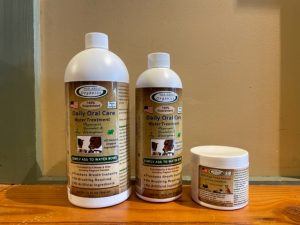
Photo by Green Dog Pet Supply
Mad About Organics is an Oregon company dedicated to making a variety of pet care products made with safe natural ingredients. These oral care products include a liquid water additive that helps keep pets’ mouths clean and fresh (16oz/32oz), and a powdered form (4oz) which can be added on a daily basis to dry or wet food. The powder also has added immune support, and has been proven to reduce plaque and tartar on the teeth and gums (depending on diet and how long the plaque has been there), showing results in 2-8 weeks. It contains kelp and like the Plaque Off, shouldn’t be used for animals with hyperthyroid disease. We’ve also heard stories from M.A.O. and from our customers that the powder really helps to repel fleas as well! Both the liquid and powdered form are safe for both cats and dogs. Start small and increase to proper dose to acclimate them to the flavors (especially cats). You don’t want them to refuse their water if they feel like it tastes funny.  🙂

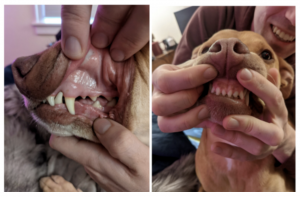
Photo By C. Miltenberger


For years, store dog Sophia has eaten Answers brand fermented raw foods, raw fermented milks and regularly chews raw bones and bully sticks. As a result she has strong, sparkly white teeth!

Try to build oral care into your daily routine. For your pets that can chew, give them a little something to chew, even if it’s just a quick Whimzees stick for dogs, or a freeze dried chicken heart for cats or small dogs.

Study Finds No Link Between Grain-Free Diets and DCM in Dogs

This article is reprinted from Pets Plus Magazine because we think they worded it well:

A new study failed to find a definitive relationship between grain-free and legume-rich diets and dilated cardiomyopathy in dogs.

A group of veterinarians, veterinary cardiologists and animal nutritionists from BSM Partners, a pet care research and consulting firm, examined more than 150 studies for the analysis.

“Additionally, the FDA’s reported cases of DCM include incomplete information, making it impossible to draw any sound conclusions from this data,” according to a press release from BSM.

The peer-reviewed article, which appears in the Journal of Animal Science, is an exhaustive literature review regarding the causes of DCM, and the first research resulting from BSM Partners’ long-term DCM research effort.

“We wanted to gain the best understanding of this issue, so we examined the results of more than 150 studies, which taken together did not support a link between grain-free and legume-rich diets, and DCM,” said Dr. Sydney McCauley, an animal nutritionist and the article’s lead author. “What the science does make clear is that DCM is largely an inherited disease.

The U.S. Food and Drug Administration last year issued an update on its investigation into reports of DCM in pets eating certain commercial foods. The FDA included a list of “Dog Food Brands Named Most Frequently to DCM Cases Reported to FDA,” including many favorites of independent pet stores.

The new article details published research highlighting a number of other factors that could contribute to the presence of DCM. These include nutrient deficiencies, myocarditis, chronic tachycardia and hypothyroid disease.

“We believe that further research is needed in order to reach sound conclusions with respect to the relationship between diet and DCM,” said Dr. Eva Oxford, a veterinary cardiologist and an article coauthor. “This is why BSM Partners has initiated multiple original research projects that will shed additional light on this topic.”

BSM researchers also stated that while the FDA has referenced many reported cases of DCM in dogs eating grain-free or legume-rich diets, the majority of these cases contained incomplete information.

“For example, integral data such as the dog’s complete diet history, age, or the presence of concurrent conditions were often missing,” according to the press release. “Additionally, some of the reported cases were of dog breeds with a known genetic predisposition to DCM, which further confounds the claim of a dietary role.
Original link to the Pets Plus Magazine article here


Please see Green Dog’s previous posts on this matter, explaining the ins and outs of this issue, simple things you can do to support your dog’s health if you choose to feed any kibble diet:

Attention Kibble Feeders: New Health Problem Reported.
Note: This was the article we posted when the first news of the alleged link between grain free foods and heart disease. It has since been proven that there is no link between grain free foods and cardiomyopathy. That being said, we still feel this article has valuable and important information about processed foods such as kibble, and how they are in fact still compromised nutritionally when it comes to the fragile amino acids that dogs and cats rely on for a healthy body. Educate yourself about how some companies “cheat” when it comes to proteins, and easy and inexpensive ways to amend your pet’s diet to ensure they’re getting these amino acids and other nutrients that will support their health and longevity.

When Vets Tell you To Switch From Grain Free Kibble To Grains
You may have heard something online or from your vet about the issue of dogs eating grain free foods sometimes showing low levels of taurine in their bloodwork. Since then, we’ve had a number of customers that come saying their vet told them to switch to a food containing grains. One local vet in our area sent out an email about heart disease, urging their customers to use foods containing grain, and also advocating for the use of  “Meat By-Products” in pet foods, and we’d like to address both of these topics to help you learn more and make educated decisions. One thing that we feel is important to point out is that some of the diets with grain in them do contain harmful ingredients. Not all grain is bad, of course – we carry a few foods with grain that we like, but there are a few ingredients in other products that we’d never allow in the store. Read why.

Congratulations On Your New Kitty!

Whether you’ve gotten a kitten or an adult cat, we hope that these tips will come in handy for you:

Nothing’s more fun than a new kitten, and we know you’ll have a blast. However, there are some things that we feel are sometimes not well communicated to new cat owners about the long term care of cats that could help you make your kitty’s life as long and healthy as it could be, as well as helping you to avoid behavioral issues in the future.
We might be called Green Dog, but the owners and staff of Green Dog are actually made up of some pretty serious cat people. We know there’s a lot of info in here, especially in the diet section, but after serving the cat community of Portland since 2004, our hearts are often heavy from the overwhelming numbers of cats with chronic illness, much of which we feel could have been prevented with better nutrition. Also, a greater understanding of the behavioral needs of cats could help to prevent or resolve behavioral issues that are very difficult for the humans in the household to live with and often result in cats being given up to shelters.

(more…)

When Vets Tell You To Switch from Grain Free Kibble to Grains

You may have heard something online or from your vet about the issue of dogs eating grain free foods sometimes showing low levels of taurine in their bloodwork. Since then, we’ve had a number of customers that come saying their vet told them to switch to a food containing grains. One local vet in our area just sent out an email about Heart Disease and grain free foods, and also advocating for the use of  “Meat By-Products” in pet foods, and we’d like to address both of these topics to help you learn more and make educated decisions.
Grain Free vs. Grain Friendly Diets:

The truth is, all processed dry pet food diets are compromised nutritionally due to high-heat, high-pressure extrusion and the need for starchy carbs to bind them and make those little crunchy nuggets. Critical amino acids like taurine that are found in muscle meats and organs are fragile and very heat sensitive, and so become damaged by processing. It’s true that another variable that might exacerbate these diet related heart problems could very well be the overuse of legumes in dog foods. Some brands use a lot of them because they contain plant proteins that are less expensive than meat proteins, but plant proteins don’t contain those vital amino acids. Large quantities of peas may very well be blocking absorption of those important amino acids found in meat that do vital jobs in your dog’s body like support his heart function.
Please read more in this important article – we’ve tried hard to distill the facts and offer suggestions for how to avoid trouble.

One thing that frustrates us is that many traditional vets work closely with brands like Purina and Hills, who are companies eager to use this opportunity to switch nervous consumers back to their formulas that contain corn, wheat, and soy. Some of these well-intentioned vets are simply advising customers to switch to any food containing grains. Please note that foods made with grains also are using plant proteins to save the company money by taking the place of more species appropriate proteins from meat, and these plant proteins also do not contain those valuable amino acids like taurine, just like in grain free foods.

Both corn and wheat are high carb and high glycemic ingredients and can also cause food sensitivities/allergic reactions in dogs. We often see dogs with new troubles come to us after having been on a diet like this, and we are able to reverse these new issues when we remove the foods that contain corn, wheat, and soy and switch to kibbles that have higher quality sources of meat proteins.

More importantly, ingredients such as corn, wheat and soy are likely to contain contaminates that don’t cook out.
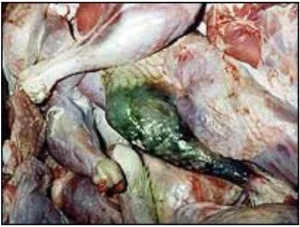
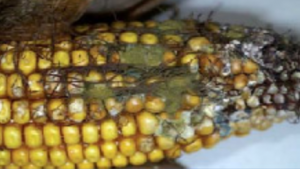
GMO crops are sprayed with large quantities of RoundUp (glyphosate), and corn is especially problematic as it almost certainly contains dangerous aflatoxins. These are dangerous grain molds, toxic to humans and animals, even in very small amounts. Our most recent stats  from 2017  show that 88% of all corn tested nationally was contaminated with aflatoxins, and in some previous years (2012) it has been 100%. A testing agency stated:”With more than ten-years of experience monitoring the occurrence of mycotoxins in livestock feeds, BIOMIN has shown that co-occurrence of mycotoxins (the presence of more than one mycotoxin) is the rule and not the exception” The FDA allows mycotoxins to be at 20 ppb (parts per billion) in pet foods, however science shows that even small amounts of mycotoxins can be dangerous to pets. From the International Journal of Food Microbiology, Drs. Herman J. Boermans and Maxwell C.K. Leung published the report “Mycotoxins and the pet food industry: Toxicological evidence and risk assessment” in 2007. One of the biggest issues of concern discussed is that existing studies of mycotoxin contamination in pet food overlook the day to day consumption of small amounts of mycotoxins; resulting in “chronic diseases such as liver and kidney fibrosis, infections resulting from immunosuppression and cancer.” In 2005 a Diamond Foods aflatoxin recall resulted in 100 dog deaths.

Dr Karen Becker DVM says this about soy:

  • “Most soy grown in the U.S is genetically modified, so in addition to potentially toxic levels of glyphosate, the plants also contain naturally high levels of anti-nutrients and phytoestrogens
  • Raw, mature soybeans contain phytates that prevent mineral absorption and substances that block the enzymes needed to digest protein
  • In dogs and cats, soy has been linked to gas and bloat, bladder stones, blood sugar fluctuations, thyroid damage, and seizures
  • All in all, the potential risks associated with feeding soy to furry family members are unacceptably high”

We don’t have a problem with some grains in foods, and we carry a few lines that have ingredients like oats and barley and rice. All of the kibbles we carry generally have a high percentage of their protein content derived from muscle meats and organs and not plant proteins (even the ones that use some peas). However, you don’t have to run to a food containing grains. The amino acids in all extruded kibbles suffer damage from heat processing. If you shop with us, ask us what percentage of your food’s guaranteed analysis of protein is derived from meat proteins (as opposed to plant proteins). If not, you can
1)call the company and ask this question. If they won’t tell you, perhaps switch brands.
2) Look for a baked kibble (as opposed to extruded) as more of the amino acids survive baking intact. Stella and Chewy’s is one baked kibble we carry.
3) No matter what, consider adding some fresh taurine rich foods to your pet’s dry food. It’s easy, can be inexpensive, and your pet will love it! See here for suggestions

Re: Meat By-Products:
One thing they said that we do take issue with is the statement that “Meat By-products” get a bad rap and are actually just contain good organ meats. Organ meats are desirable ingredients, and are far more expensive than “Meat By-products”. Good organ meats would be listed on the label as their own named ingredient, ie: “beef liver” or “beef hearts”, etc. and would be USDA inspected and passed for human consumption.  When you look closely at FDA laws concerning pet food ingredients, “Meat By-products” are defined as rendered product that is legally allowed to be a mix of any species of animal, including animals that “died otherwise than by slaughter”. These include animals that died from disease, euthanized animals, condemned/spoiled meats, and roadkill. Rendering facilities are waste management facilities, with separate standards for handling and storing ingredients meant to be rendered. FDA states clearly that these ingredients listed above are acceptable in pet foods. When looking at your ingredient list, it’s important that you see the species of animal mentioned with the proteins and the fat. ie: avoid “Animal Fat” and choose “Chicken Fat”.
We love human quality organ meats for pets, and strongly advocate for their use to help supplement naturally occurring amino acids like taurine, cystein and methionine that support heart function, but we avoid By-products in pet foods, as even named ingredients such as “Chicken By-products” are not handled with the same safety or quality standards as USDA inspected and passed meats and organs.

UPDATE:

Study Finds No Link Between Grain-Free Diets and DCM in Dogs
Read More Here

Attention Kibble Feeders: New Health Problem Reported

Note: This was the article we posted when the first news of the alleged link between grain free foods and heart disease. It has since been proven that there is no link between grain free foods and cardiomyopathy. That being said, we still feel this article has valuable and important information about processed foods such as kibble, and how they are in fact still compromised nutritionally when it comes to the fragile amino acids that dogs and cats rely on for a healthy body. Educate yourself about how some companies “cheat” when it comes to proteins, and easy and inexpensive ways to amend your pet’s diet to ensure they’re getting these amino acids and other nutrients that will support their health and longevity. Read On!

(Part 4 of our Toppers Are Important Series)

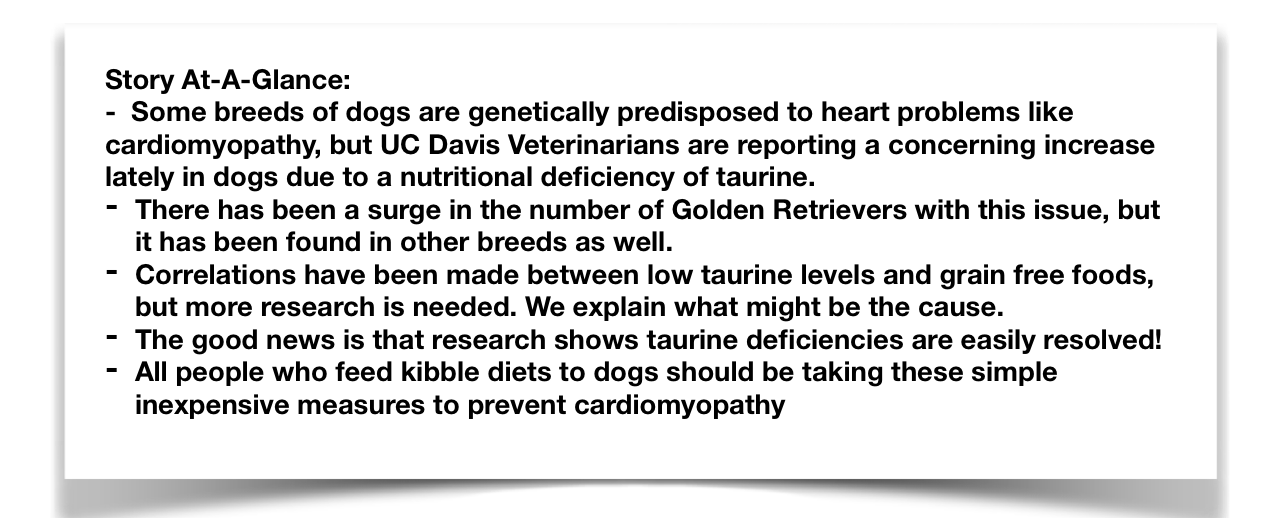
So there’s a lot of information bouncing around the internet recently about grain-free foods contributing to heart disease in dogs. Like most things on the internet, much of this information is good, yet some downright irritating with its bad advice and misinterpretation of the facts. I thought I’d chime in and try to distill it for anyone that it’s interested. Truthfully, all kibble feeders should be interested. Please remember, I’m not bashing kibble per se, but those that feed it should be aware of its shortfalls. The good news is that its very easy and not expensive to provide excellent protection against these shortfalls when feeding a dry kibble diet!

So here’s the thing with this recent issue:
U.C. Davis reported an increase in heart disease (specifically dilated cardiomyopathy or DCM) in dogs eating grain free kibble, and when tested, they have low taurine levels.
Some breeds of dogs (like boxers, dobermans, cavaliers, etc) have genetic predispositions to cardiomyopathy (a serious weakening of the heart muscle making it harder to pump blood through the body), but there’s a recent increase in cardiomyopathy in other breeds as well, linked to Taurine deficiency. Golden Retrievers may be especially vulnerable to this. The amazing news is that recent research is showing that when you improve their taurine levels through nutrition, they rapidly and significantly improve their heart function (even with other heart problems like murmurs and arrhythmias) Yay! 
Here’s what we do know: This definitely points to a nutritional problem with their diets.

Remember as you read other articles: Some dogs showing low taurine levels were eating food with grains. Some dogs with DCM didn’t have low taurine levels. There hasn’t been a formal study yet, this is still just an FDA investigation into reports of a handful of dogs that aren’t considered genetically predisposed to DCM presenting with the disease. More here
The good thing about this event is that FDA and the vets that are collaborating with them are suggesting that there may be a strong correlation between diet and Taurine deficiency. We concur!

(more…)

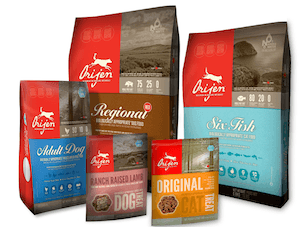
Our Take on the Orijen/Acana Class Action Lawsuit

I’m sure you have started to hear some things about a class action lawsuit filed against Champion Pet Foods, the makers of Acana and Orijen pet foods. We believe the claims asserted in the lawsuit are merit-less and Champion Pet Foods does intend to vigorously defend itself in the litigation. The Class Action Complaint makes reference to the Clean Label Project, which claims to be an initiative that tests pet foods for heavy metals and other contaminants. It appears the group has relied upon opaque testing methods to generate erroneous claims, but unfortunately, the group does not disclose its testing methodologies or procedures used, making it difficult to determine how the results were reached.
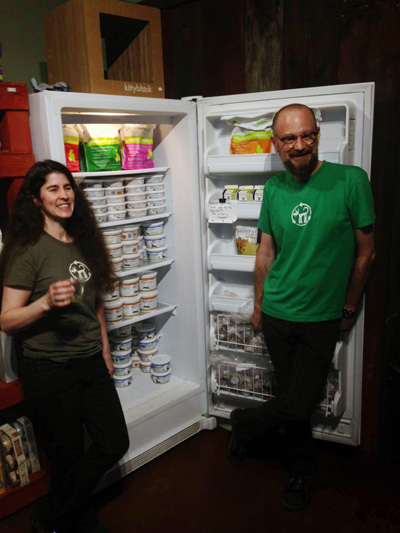
We first learned of this issue almost a year ago, when a news story covered the Clean Label Project’s allegations against Champion foods. On first look the Clean Label Project looks to be the organization we’ve always wanted; an independent testing organization that would help to monitor pet food for contaminants like aflatoxins, lead, nutritional quality, etc. However (more…)

A Discussion Of FDA Disparity in Raw vs. Dry Pet Food Safety

This week we had to tell our customers about another voluntary recall of raw pet food. The Rad Cat Company was notified by the FDA and the Ohio Department of Agriculture after several tubs of multiple varieties of Rad Cat Raw Diet were purchased and tested. All samples tested negative for E. Coli and Salmonella but two tested positive for Listeria Monocytogenes.
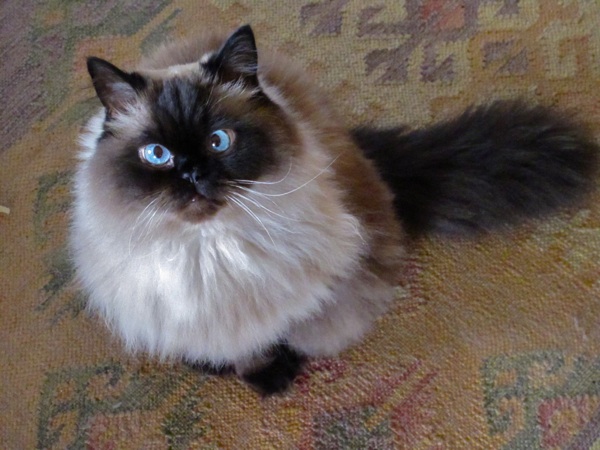
Outdoor cats likely encounter Listeria frequently, as Listeria is a common presence in nature, found widely in such places as water and soil, leafy vegetables and animal products. It could however be a danger to some animals who eat it, and especially to the people that might handle the food without washing their hands or the surfaces exposed to it after feeding it.

We believe Rad Cat when they say that their third party inspections have come back clean. We’ve been in their kitchens and have never seen a facility so tightly controlled for cleanliness and safety. Their sourcing is impeccable. They use High Pressure Pasteurization to kill any bacteria that might be found on the poultry products before they are processed into their formulas, and they test the finished product with a third party lab, doing a full aerobic plate count. They then hold the food for a time before shipping it and it is tested again before releasing it to the distributor. The temperature is controlled through every step of its journey and even tested here at the store upon receipt to ensure that it was maintained as it traveled to us. More details here. If only our human foods were handled and controlled for safety as strictly as the foods made at Rad Cat! We feed it with confidence to Otis, our senior cat. If I were pressed to name my favorite of the more than 4,500 items we carry, Rad Cat would be in my top two.

It might be an opportune time to mention our frustration with the disparity between how the FDA treats raw foods vs. how they treat other pet foods like kibble.
Raw food is under intense scrutiny, but the facts point to a significant lack of scrutiny towards kibble based foods, despite the fact that in past years dry food recalls have far outpaced raw food recalls, and the most significant recalls, complaints of illnesses, and death have all resulted from contaminated dry pet foods.

A Few Examples:
Over 100 dogs died in 2005 from aflatoxin Poisoning (a very dangerous, carcinogenic grain mold, most commonly found in corn but is also possible in ingredients like peas). Surveys done in 2016 show that aflatoxin has been found in higher amounts than ever (A total of 387 corn samples and 79 distiller’s dried grains with solubles (DDGS) samples from across the U.S. were tested. Results revealed that 90 percent of corn samples and 100 percent of DDGS samples were contaminated by at least one mycotoxin, and 96 percent of the DDGS samples contained more than one), yet there have been no aflatoxin recalls since 2013. We must assume that FDA must not be testing regularly for aflatoxins.

Judging from the number of recalls for Salmonella in raw foods, it

would lead you to believe that there is a significant risk of salmonella in raw foods, and in fact the FDA even issued a warning about the risks of salmonella in raw pet food. However, from 2010 – 2015, 78 types of kibble pet food were recalled due to salmonella contamination, vs. 27 for raw foods. What this number doesn’t even capture is the sheer quantity of kibble that was recalled during this time, vs. raw foods with single lot numbers/single flavors. In the 2013 the Natura recall was massive – millions of pounds – and included all of its many formulas including treats (“All Lot Codes, All UPC’s, All package sizes, All expiration dates”). The recall for salmonella in the Diamond foods that were produced at their South Carolina Plant in 2012 resulted in the recall of all of their brands and stopped ALL production for a time. The Taste of the Wild part of this recall alone resulted in over 10 million pounds of food being pulled from store shelves.

No Warnings About Dry Foods
Neither the FDA or the AVMA has ever issued a formal warning about the risk of salmonella in all pet foods. In fact, the same week that the AVMA issued a warning to consumers about the risk of salmonella in raw pet foods, there were (according to the CDC) a total of 49 individuals (47 individuals in 20 states and two individuals in Canada) infected with the outbreak strain of Salmonella Infantis related to this salmonella recall at Diamond foods. This included at least 10 people hospitalized. The FDA has announced regular testing for raw foods, but not for dry pet foods. In fact, they have not appeared to test any dry pet foods recently, as there have been no salmonella recalls for dry pet food since 2015, which is in stark contrast to many years before this time.

A class action suit was dropped against Beneful in 2016 stating, “The Court rejects Plaintiffs’ position that a reasonable jury could find Beneful unsafe based on the mere fact that 1,400 dogs ate Beneful and got sick or died thereafter. This is insufficient evidence of causation.” So many complaints of illness and death had been reported by Beneful consumers to the FDA that they did do some testing. Some samples came back positive for Melamine (the same thing found in that terrible 2007 recall that resulted in hundreds, possibly thousands of deaths), and some samples came back positive for ethoxyquin, a euthanasia drug so recently implicated in that Evanger’s recall that killed a dog. Beneful also refused access to the FDA to records and didn’t allow them to photograph their manufacturing plant. Yet the FDA did not issue any warning nor was there any sort of a recall. Can you imagine a brand of raw food with 1,400 allegations of sickness and deaths without repercussions?

We certainly do not mean to minimize the risks of any pathogen in any form of pet food, especially to the humans that handle these foods and are not as well equipped as their carnivorous pets to stay healthy when exposed. We just wish the FDA, AVMA, and Big Pet Food would hold all pet foods to the same standards of safety.

(more…)

Jiminy Crickets!

As our world’s population grows, our demand for resources becomes more difficult to sustain. This especially goes for meat production, which requires significant land use, incredible amounts of water and food needed to raise the animals, creates conflict with wildlife concerns, and is responsible for so much pollution, especially surrounding large-scale Confined Animal Feeding Operations. Better known as Factory Farming, these CAFOs also force animals to live in inhumane conditions by anyone’s standards, and are also responsible for contributing to problems with antibiotic resistance for us humans.


 

Consider cutting back or eliminating meat in your own diet as “Carbon Credits for Owning Carnivores”.
We love the carnivores we’ve chosen as our cherished furry family members, and they need large quantities of high quality animal proteins to thrive, so what to do? One part of the solution, of course, is for all of us to eat less meat, and to choose to only eat meat raised in humane conditions by farms that use sustainable farming and ranching practices (especially those you might find at your local Farmer’s Market or Food Coop).


Another interesting part of this solution may be found in insect protein!
Before you saw EEEWWWWW! and close this page, realize that many insects such as crickets, termites and mealworms are already a staple protein in as many 80% of other countries.  (Don’t forget: Lobsters and Shrimp are some of our most cherished delicacies, but  it wasn’t until the 1880s that people thought of lobsters as anything but ugly cockroaches of the sea, good only for fertilizer and prison food.  In fact, both crickets and lobsters are from the same family, arthropods.)

Crickets are making their way into the U.S. as novelty treats. Did you catch Salt and Straw’s Halloween ice cream flavors? One of them was “Creepy Crawly Critters”, which featured chocolate covered crickets and coconut toffee-brittle covered mealworms blended into a matcha ice cream.

Funny stuff, but from both a sustainability and nutritional standpoint, insects actually make big sense! Check this out – Crickets have:

(more…)

A few Myths about Senior Dogs and Nutrition

We all want to make sure we’re supporting our senior pets as they get older, but there are a few myths that persist about what is nutritionally appropriate for senior dogs.

Myth #1: Seniors need lower protein diets

It’s true that we used to be instructed to lower protein when dogs get older, but current research shows that older dogs actually need significantly higher protein than their younger counterparts. Their bodies become less efficient at metabolizing proteins as they age, so increasing the amount (and the digestibility) of proteins is key to supporting them and helping to prevent muscle wasting.

Pro Tip: Raw foods have the most bioavailable proteins, but if you feed a kibble diet, mixing in a nugget or two of prepared raw diets from our freezers can be a delicious, affordable, and super nutritious way to get whole food vitamins, minerals and important amino acids that haven’t been damaged by high heat cooking. Senior dogs need these tools to thrive as they age, and this easy solution is better and cheaper than any commercial supplement or food in a can!

Myth #2: But couldn’t too much protein hurt their kidneys?

This idea was based on studies done on rats, not dogs. Rats have evolved with different nutritional requirements than dogs have, so when they did study this question in dogs, it was determined that no amount of protein can hurt a healthy kidney. Mary Straus of dogaware.com says , “In fact, senior dogs fed high protein diets live longer and are healthier than those that are fed low protein diets, even when one kidney has been removed. Studies conducted at the University of Georgia in the 1990s demonstrated that feeding protein levels of 34 percent (on a dry matter basis) to older dogs with chronic kidney failure and dogs with only one kidney caused no ill effects. The mortality rate was greater for the dogs fed 18 percent protein than for the dogs fed 34 percent protein. Another study done on dogs with only one kidney showed that protein levels up to 44 percent of the diet had no harmful effect on the remaining kidney.” For a more comprehensive discussion of protein in dog diets, see this link
(more…)

Green Tip – Why You Should Avoid Farmed Salmon

Seafood Watch Guide to Salmon

When we are evaluating a pet food or treat to sell at the store, there is an (ever-expanding) list of ingredients that we will not carry, and farmed salmon is definitely one of them. Some items we don’t like because the ingredients are harmful to the environment, some because practices are inhumane or these animals are fed things that might remain in the meat, and some because they are harmful to the animals that consume them. Farmed salmon has the special distinction as being all of these things.

Farming salmon is factory farming at its worst – it’s devastating to the environment, large overcrowded pens require massive amounts of antibiotics and pesticide usage to combat health problems, contagious diseases and escaped fish are a big risk to wild populations of fish, and the resulting product is high in PCBs and other chemicals.

(more…)