


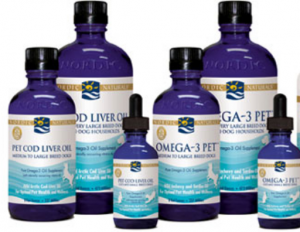
Photo from Nordic Naturals Website
There are a few things that I wish I could convince more customers to try adding to their dog’s diet, and fish oil is certainly one of them. (the other one is digestive enzymes, and I’ll be writing about those soon). They have many benefits, including reduction of joint pain and help with itchy skin, and now three studies have come out demonstrating this benefit in dogs with arthritis pain.
In humans it is well known that infants need DHA (one of the Omega 3 fatty acids) to aid in proper retinal and brain development, as well as support and maintenance of the central nervous system. In adults one of the best documented effects is the benefit to the heart (lowering of bad cholesterol and triglycerides, etc), but it is also showing good results in reducing inflammation (countless chronic diseases are linked to inflammation in the tissues and organs). It helps to reduce the chance of blood clots, to elevate mood, to slow down degenerative brain diseases like Alzheimer’s, as well as having significant effects on kidney function. Deficiencies have been linked to low birth weight and hyperactivity when pregnant mothers don’t get enough Omega 3s. (increasing your intake of low mercury fish oils through supplementation, and switching to grass-fed meats are two ways of getting more Omega 3s in your diet. Cutting down on your Omega 6s (vegetable oils found in processed foods) helps your body a great deal as well to reduce inflammation.
In Dogs and Cats these same benefits of course occur. One of the effects that is most easy to observe is the almost immediate benefit to the skin and coat. Animals with chronic skin problems should almost always be taking fish oils.About a month ago, we convinced a customer to put one of her cats onto fish oil, as she had some problems with hair loss and some scabbiness to the skin. Not only did the hair start regrowing and the skin start repairing itself, but she noticed how nice and shiny the rest of her coat looked. She told us, “I was so impressed with how her hair looked that I started to wonder what it would do for my healthy cats. They all now are shinier, hardly shed at all, and have lost that little bit of dandruff that seems to always have been there.” We’ve seen this many times in dogs and cats. Of course we try to carry the best pet foods we can find, and these companies are doing a fairly good job of including high quality fish oils, applying them after the food is cooled so they are not damaged by the cooking process. However, I think that animals who are eating (even high quality) processed foods are still at somewhat of a disadvantage nutritionally than animals eating whole foods. Also, shipping in hot trucks, storage, etc must have a little bit of an effect on the quality of those fats (though they are of course combined with antioxidants to prevent this sort of degradation), and the amounts in food may not be high enough for some individual animals, especially those on a weight reduction kibble, or with specific health challenges, like arthritis.
The second effect that is relatively easy to observe is the reduction of joint pain. Here’s a quote from one of the new studies, “In the first study, dogs with chronic pain associated with osteoarthritis showed improvements in their ability to play and rise from rest at six weeks after being switched to a diet containing high concentrations of fish oil omega-3 fatty acids. The second study showed that limb strength in dogs improved with omega-3 dietary intervention. In the third study, veterinarians were able to reduce the dosage of carprofen, a common NSAID used for pain relief in dogs with osteoarthritis, while still providing pain relief to dogs that were fed food supplemented with omega-3 fatty acids.” http://www.avma.org/press/releases/100304_omega-3_fatty_acids.asp
These studies were done by Hills nutrition, and are certainly valuable to help illustrate and validate the effects that we see. As the press release states, “This finding is especially important because it allows veterinarians to better understand that complications that may arise from pain relief medications could be reduced when the medications are used in combination with proper nutrition.”
I only wish that Hills would someday take the knowledge that they glean from these studies and combine them with better quality foods in their diets. It’s impressive that these studies showed such significant results when combined with a diet so high in grains and soy (that have been shown to have inflammatory effects and high levels of Omega 6s which can contribute to inflammation), combined with fillers and by-products. (The ingredients at the time of this blog post leading up to fish oil in their joint prescription food are: “Ground Whole Grain Corn, Chicken By-Product Meal, Flaxseed, Soybean Mill Run, Brewers Rice, Soybean Meal, Pork Fat (preserved with mixed tocopherols and citric acid), Chicken Liver Flavor, Powdered Cellulose, Fish Oil”.) Blech. Imagine how much benefit a good quality, low-mercury fish oil, stored in your fridge and added fresh every day to a healthy diet (made from human grade meats, low in or absent of grains and rich in antioxidents from whole foods) would provide!
DHA, found in fish oils, has significant effects on the health of the brain and nervous system, including the health of the eyes. Supplementing a female dog with DHA while pregnant and lactating results in an improvement in neurological health of the puppies. When puppies are supplemented with fish oil, it’s of great benefit to them as well. A recent study suggests that feeding puppies foods high in DHA (docosahexaenoic acid) improves several aspects of their development. The study, published this past September in the Journal of the American Veterinary Medical Association and conducted by Hill’s Pet Nutrition in Canada, concluded that: Dietary fortification with fish oils rich in DHA and possibly other nutrients implicated in neurocognitive development following weaning improved cognitive, memory, psychomotor, immunologic, and retinal functions in growing dogs.
Dr Karen Becker, DVM says, “Studies also suggest that, with sufficient DHA and adequate antioxidants to protect the fragile fatty acids, older dogs are more alert, remember more, and retain the ability to stay mentally sharp”.
So, please consider adding good quality fish oils to your pet’s diet. It could have many lasting benefits on their overall health. We always recommend that when you start anything new, introduce it slowly to let the body adapt. No one likes digestive surprises!
Good link to benefits of salmon oil for pets
Some of our favorite fish oils:
Nordic Naturals
Iceland Pure
Royal Coat Express
Grizzly Pollock Oil
I have fallen in love with the GreenDogPetSupply forum. Our family includes several dogs and our attention to their well being requires the same attention to diet and supplement I feed the kids and hubby. Fish oil was the core of our pack’s supplement regimen until our Shepard, Lilly developed severe skin allergies. I found a veterinarian nutritionist that suggested flax seed as omega source. Lilly’s skin condition improved dramatically after I found a supplement that included both flax and a powerful enzyme blend formulation. The company VitaHound has only a single product, therefor I really need to locate a quality fish oil product for the rest of dog’s that only require a simple omega source.
We carry a number of them – I think these would be easy to find at your local independent pet supply store. I like pollock oil from Grizzly, as it’s more sustainable than salmon oil, as is anchovy/sardine (several brands are out there). I also really love coconut oil for pets and for people, which can be easily sourced at the grocery store