


Training a Cat

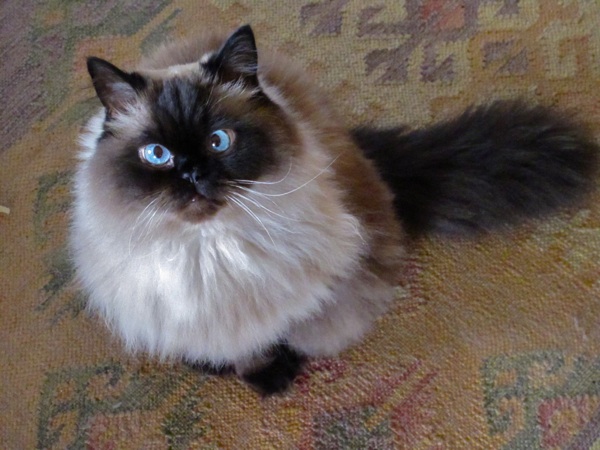
otisblueeyesThere’s a lot of cat stuff on our minds these days as we’ve recently adopted a 10 year old Himalayan cat.
So many people think that cats don’t need anything – we hear this all the time. They seem to understand that dogs need interaction, exercise and mental stimulation, but cats, (especially indoor cats) need these things as well. One thing we hear a lot from the people who think their cats don’t need anything is how horrible their cats’ behavior is and how destructive these cats are to their home!
We needed to teach Otis a lot of new things when we brought him in, as we were turning him from an indoor/outdoor cat to an entirely indoor cat, so making sure he was good at a litter box and scratching posts and keeping him stimulated enough to make up for his outdoor time was all important. I thought it might be fun to share a few videos with you.
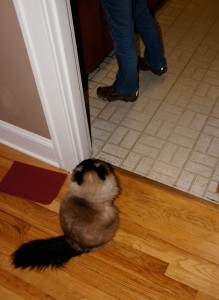
Cats can certainly be trained through positive reinforcement techniques to follow commands. He’s got a pretty good recall and he sits like a champ on command. I also needed him to get the heck out from under my feet in the kitchen – I decided to use the threshold of the kitchen as a visual marker; something easy for him to understand. Get over the threshold and stay there and the treats you seek will come to you:
<iframe width=”560″ height=”315″ src=”https://www.youtube.com/embed/g8StgvhBxzg” title=”YouTube video player” frameborder=”0″ allow=”accelerometer; autoplay; clipboard-write; encrypted-media; gyroscope; picture-in-picture” allowfullscreen></iframe>

It’s been working well. First I lured him with a treat into the spot, while I said the command, then I started saying “get in your spot” and then luring and rewarding him, and then I would say the command and pause before luring him. It took longer than it would have taken a dog, but he eventually had that “Aha moment” and did it himself. Now, he needs to stay in the spot for longer and longer periods to get treats.
spot

He had a history of being brushed and liking it in the past (you have to brush a Himalayan!) but when he came to us he didn’t tolerate it much. Mostly he wanted to play and bite the brush, and forget about brushing anything but his cheeks and back. So, we started with what he would tolerate, and just when he was doing a nice job, we’d stop and get a treat. Of course over time he’d tolerate a bit more and a bit more. I’d try to reward it when he did a slightly better job than usual, and if I pushed it too long and he got cranky/silly about it, I just stopped and left.
Each time he rolled over on his back (even when he wasn’t being brushed) I’d use the word “belly” while I talked to him, and if he let me touch and later rub the belly (without snapping the bear trap shut – our name for the attack we’d often get if we touched it) I’d give him a treat. We’ve gotten pretty far and I was impressed when he started making the connection for giving up the belly when I asked for it:

Any pet can learn to tolerate and eventually enjoy things they don’t like using this same process. Nail trims, handling body parts they don’t like touched, and being brushed are just three practical examples. You have to start with something they do tolerate or even enjoy, even if that means that you have to start with something that hardly looks like the behavior you want to achieve. Building up slowly is the key – even the tiniest progress is worth rewarding, and never ever forcing something they’re uncomfortable with. Here’s another post about this process. It’s worth working on! If you ever want to talk to me (Christine) in more detail about your specific challenge, please do come in and I’ll try to help you with some tips

Chicken Necks for Cats and Dogs

Otis came to us at 10 years old with quite a bit of plaque on his teeth (pretty normal for a cat that only eats kibble) and during his dental cleaning, the vet noticed that he has a few abnormalities in the design of his mouth that  could cause trouble if not kept clean (pretty normal for a Himalayan). So, I’ve been working on acclimating him to having toothpaste rubbed on his gums with the hope of brushing them someday, etc. Another strategy we’ve employed is that we’ve started giving him chicken neck treats and have found it so interesting to watch him process them, as he chews and chews them on both sides of his mouth. Truthfully, I had recommended them to my customers, but before we had Otis, we have never had a cat that I could give them to – our last was in her 20s before we thought about giving her necks and she wouldn’t have done well with them at that point. I thought it would be interesting to people to see how they process them, so I took this video.  It also seems so stimulating for his mind – it takes him a while to figure out how he’s going to pick them up (I edited out a lot of that at the beginning of the video) and you can see him really thinking and giving it great effort, and he seems so satisfied all night on the nights we’ve been giving them. In fact, we’ve linked it to a game to make it all more exciting for him: There’s a great toy called “Da Bird”, whose feathers spin as they fly through the air, really simulating a bird in flight very realistically. When he makes an especially spectacular catch, he runs with it in his mouth to the kitchen and we give him his 1″ piece of neck, so it’s like he’s hunting, catching, and eating a bird. We adopted Otis because he had proven he could not remain safe outdoors (hit and badly injured by a car once and stolen at least once and luckily recovered). We wanted him to be safe and to protect the wildlife he was hunting during his 10 years as an indoor/outdoor cat, and we knew that turning him into an indoor cat meant that we would have to meet his physical and emotional needs to remain content indoors. As an indoor cat, this activity is very very exciting and satisfying for him, it’s supercharged the game making him exercise more strenuously, and no songbirds were harmed! We started with a piece of neck once a week, and have moved to about 3x a week. We believe that though he will continue to need regular dental cleanings, these yummy meat tooth scrubbers have helped his mouth stay cleaner. To create his treats, I buy half dozen whole chicken necks at a time, remove the skins, rinse them briefly and cut them into 1/2″ pieces with kitchen shears. I put the whole batch on a tray in the freezer so they freeze individually, and dump them into a freezer bag. On the nights we’re going to give one, we thaw it in a bowl of cool water – it takes very little time. Chicken gizzards also make a great cat chew/treat when cut into smaller pieces, though it takes less time for him to chew them than the necks


For dogs, you can choose from chicken necks for puppies or small dogs, duck necks (medium sized) or turkey necks for larger dogs. These can easily replace a meal for dogs. If your dog has never had one, perhaps hold it for them at first so they get the idea that it’s for chewing (I suppose I should say to be careful of your fingers, which are also made of meat and bone).  The benefits are great – so delicious and interesting to chew, and they really use their back teeth for crunching them up, making for a good toothbrush. We met a holistic vet recently who told us that he recommends feeding 3 raw poultry parts per week for dogs, in place of commercial joint supplements, due to the high levels of natural glucosamine and chondroitin and other joint supporting nutrients in the collagen and connective tissues of necks in a highly bio-available state.

Another nice benefit for dogs with anal gland issues – several chicken necks a week can make nice firm stools that help to express the anal glands more effectively.

That photo above links to a great video that shows how valuable poultry necks are for cleaning dogs’ teeth.

Feel weird about giving them? We did too a bit at first, but as long as poultry bones are raw, they can be fed to pets – never ever ever EVER cook poultry bones (or other kind of bone) and give them to pets – cooking makes the bones brittle and very dangerous. Raw poultry necks have smaller more pliable bones and lots of collagen. Our holistic vet thinks raw chicken necks are great! Think of all the hundreds of thousands of feral cats out there eating whole mice and birds – crunch crunch crunch! (Their presence is a real disaster for wildlife as a result – please see this link!)  However, for those that question whether cats can and do eat larger prey, and whether the tiny bones in a chicken neck could be unsafe for a cat to eat, here’s a video of a cat chewing the head off of a fairly large ground squirrel (of course this also illustrates what a risk cats are to wildlife. Not for the squeamish, but the point here is to show what their physical ability is to process meat and bone):
When feeding necks and other bones regularly to your pets, try to source organically fed/grass fed meats and bones to cut down on environmental contaminates. Try and buy them fresh from the best place you can (meat meant for humans to eat in supermarkets likely has a higher bacterial count than one sourced directly from a local farm (as supermarket meats are being sold and handled with the understanding that it’s meant to be cooked), or those from an Independent pet supply store, processed and handled carefully for the purpose of pets eating them raw. This is more of a concern for the safety of the humans handling them than for the pets, who aren’t as vulnerable to sickness from things like salmonella as we are.